Historical Profile: Anne of Cleves
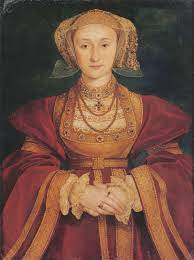
Anne of Cleves is famous for being the quickly rejected wife of Henry VIII. He reportedly told Cromwell that he ‘liked her not’. However, as part of my Tudor Quest, I was visiting all the graves of the Tudors. I went to Westminster Abbey and Anne of Cleves grave was hidden by a stack of chairs. I moved them. At that moment I knew Anne of Cleves was a lot more than what she was remembered for. And I wanted to get to know her as a person, so I decided to research her and write a blog post.
Anne of Cleves was born on 22nd September 1515 to John III the Duke of Cleves and Maria of Jülich-Berg
Her father became regent of the United Duchies of Jülich-Cleves-Berg in 1521 and Lord of Ravensberg in 1528. He strove for balance in the religious movement of the Protestant Reformation, Although, he married his daughter Sybille to John Frederick of Saxony in 1524, who would later join the Lutheran Schmalkaldic League in 1531, John III’s own court was heavily influenced by Erasmus, who was a Dutch Catholic humanist and followed Erasmus teachings rather than Luther’s. In fact, Anne herself was raised as a Catholic.
Maria of Jülich-Berg was the daughter of Ferdinand I the Holy Roman Emperor and Anna Jagiello of Bohemia which meant that she was Charles V’s niece and also a devout catholic. Maria Jülich-Berg supervised Anne’s education, making sure she was well-versed in traditional skills of needlework and managing a household. Anne’s limited education meant that she could only speak and write in her native language and didn’t have the courtly skills expected by the larger European courts.
Anne had two sisters Sibylle, (born 17th January 1512) and Amalia (born 17th October 1517). Amalia never married after negotiations with Ernest, Margrave of Baden-Durlach fell through. She also had a brother William who became Duke of Jülich-Cleves-Berg in 1539 after the death of John III, unlike his father William was a devoted Lutheran
In 1527 Anne was betrothed to Francis the son of the Duke of Lorraine, however, it was considered ‘unofficial’ and was cancelled.
After breaking with the Catholic Church in Rome in 1534, Henry started negations with the Schmalkaldic league in 1535. He allowed Thomas Cromwell to publish the Ten Articles in 1536 which rejected the seven sacraments of Catholicism (Baptism, Holy Communion, Confirmation, confession, anointing of the sick, Marriage and Ordination) and stated that are only three sacraments, baptism, penance and Holy communion. However, by this point, Henry was losing interest in the Protestant Reformation seen by the Six Articles published in 1539, which reasserted traditional Catholic doctrine such as transubstantiation (which contradicts protestant teaching) and held to the policy until his death in 1547. Although Henry’s religious views were not as radical as his advisor, he once again sought an alliance with the Schamalkaldic league in 1538 when Henry VIII faced the joint catholic threat of the alliance between Charles V and François I of France when they signed the Conclude Pact at Toledo.
Thomas Cromwell began to search for a bride to seal Henry’s protestant alliance. The land Anne’s brother ruled over was strategically important. It had access to the sea, negations were started in 1538 with Anne’s father, and when he died, the marriage talks were taken over by Anne’s brother William, who desperately wanted the match.
Henry VIII refused to agree to the match unless he could see his prospective brides, so Hans Holbein was dispatched to Cleves in August 1539 to paint Anne and Amalia. Henry VIII choose Anne. The marriage treaty was signed on 4th October 1539, and Henry agreed to wave the provision of a dowry. Anne received a safe-conduct from Mary of Hungary, so Anne travelled overland to Calais, she arrived in England on St John’s day on the 27th of December.
Anne and Henry’s first meeting did not go well, on New Year’s Eve 1539 Anne travelled to Rochester. While she was resting, Henry with five members of his privy chamber in disguise went into Anne’s chamber, while she was looking at the entertainment in the courtyard below. Henry suddenly embraced her and kissed her. She didn’t welcome his advances in some reports spitting after his kiss. Anne didn’t treat him as a King until he returned to her chambers dressed in velvet. This first meeting was an embarrassment for both parties. And Henry wanted to stop the marriage and set Cromwell on the task of finding a reason for annulment.
On the 5th of January Anne confirmed that she was free to wed and her previous engagement was cancelled the marriage went ahead at the Royal Palace of Placentia on January 6th 1540. However, the marriage was never consummated.
Henry VIII by this point was probably struggling from impotence, however, he blamed his lack of action in the bed chamber on Anne’s appearance. It also appears Anne herself lacked the knowledge of what should occur in the bed chamber in order to produce an heir, she is reported saying to Countess of Rutland, “when he comes to bed, he kisses me and taketh me by the hand and biddeth me, “Goodnight sweetheart”; and in the morning kisses me and biddeth me, “Farewell, darling”. Is that not enough?” But historians have suggested that rather than naivete on the matters of sex, Anne was actually being incredibly diplomatic, allowing her husband to save his pride by showing she was not an active person in the bedroom, and therefore she is the reason that Henry could not do the deed.
However, in my opinion, Henry VIII said to his advisors “Surely, as ye know, I liked her before not well, but now I like her much worse. For I have felt her belly and her breast, and thereby, as I can judge, she should be no maid”
Suggesting that Anne was not a virgin when she married Henry VIII, and considering what happened to Anne Boleyn who was accused of infidelity and the treatment of Catherine of Argon after the annulment, Anne of Cleves nativity served as a protection against claims of her not being a virgin since no bedded women could possibly say that a kiss on the cheek is all that is need to have sex.
Anne had the shortest marriage to Henry VIII compared to all his other wives, they were married for six months, she did appear by Henry’s side for public occasions however she was never crowned as Queen.
On 16th May 1540, Henry VIII’s distaste for his wife was clear, he started courting Katherine Howard and was looking for a way to rid himself of Anne. Thomas Cromwell now Earl of Essex (March 13th 1540) and Great Chamberlin (March 21st 1540) was unable or reluctant to dissolve the match, he was arrested on 10th June 1540.
On the 24th of June Anne left Henry’s court to visit Richmond and an investigation into her marriage was opened five days later by Gardiner. On the 6th of July 1540, Anne received a message stating that the King wanted permission for the Church to look into the validity of their marriage, although they stated the reason was for the succession, it was clear Henry wanted to be rid of her. She agreed and waited for her fate, and unknown to her on the 7th of July 1540 the clergy decided that Anne and Henry’s marriage was invalid, for three reasons
1 – Anne was pre-contracted to marry Francis Duke of Lorraine
2 – Henry VIII’s lack of consent to the marriage
3 – Lack of consummation
When Anne heard the news she fainted. She resisted the annulment for several days until it was clear that Henry VIII was not ending the alliance with Cleves, but only the marriage, she sent a letter to Henry agreeing to the annulment, signing it, “Anne daughter of Cleves” a so on the 11th July the marriage between Anne and Henry VIII was annulled.
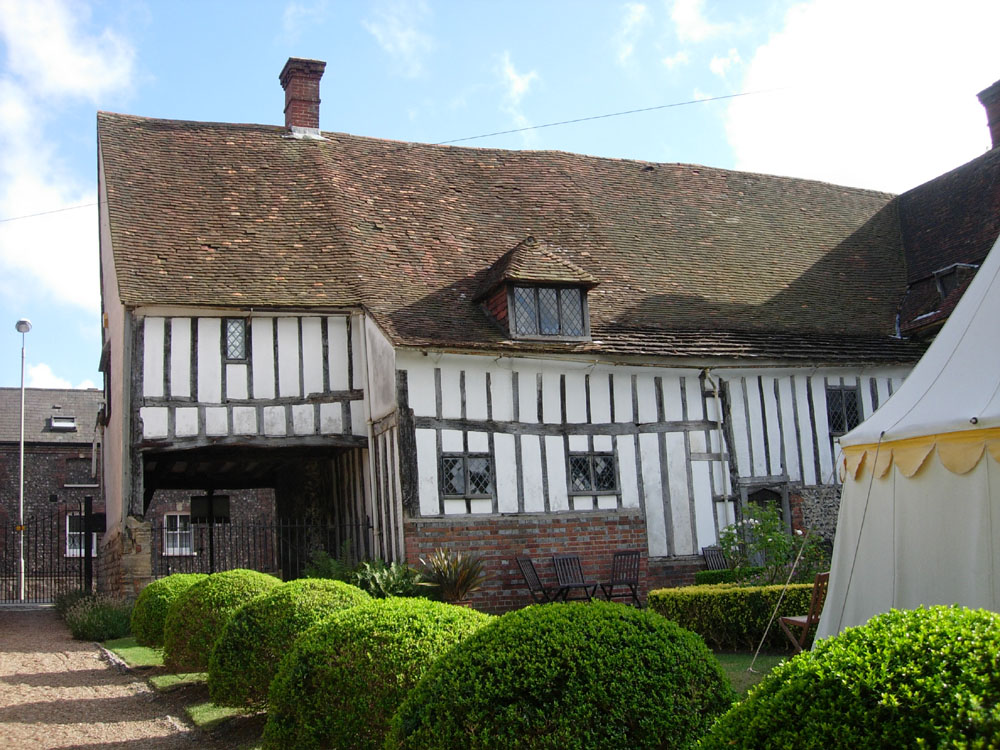
Henry was pleased with the ease of the annulment giving Anne a generous settlement, giving her the title of the “King’s beloved sister” and promising her £4000 per year and houses at Richmond and “Blechinglegh” (Bletchingley). Anne was also rewarded handsomely receiving jewels, plates, hangings, furniture, Hever castle and a house in Lewes.
In fact, you can visit Anne of Cleves house in Lewes to this day. It a beautiful place to spend a morning, I would highly recommend it.
On the 28th of July 1540, Thomas Cromwell was executed and Henry married his fifth wife Katherine Howard.
Anne settled in England, and her settlement was only given to her if she remained in the country. Her brother-in-law Johann Friedrich, along with the Schmalkaldic league broke off their alliance with England in disgust. It should be noted that Anne would not be able remarry since the reason for the annulment was due to being precontracted.
When Anne left the court, all her ladies were dismissed and replaced with new ladies in waiting. Anne made sure that there was no doubt that she was happy with her new position, even the French ambassador was unsure if Anne was a brilliant actress or truly didn’t understand the humiliation she was put through. On New Year 1541 Anne was invited to Hampton Court. Anne treated Katherine with a high level of respect, which delighted her ex-husband and the three of them dined together.
During the Autumn of 1541, a rumour floated around the court that Anne had secretly given birth to a son, fathered by Henry. Henry was furious and pulled two of Anne’s ladies of waiting Dorothy Wingfield and Jane Rattsay in for questioning by the council, they steadfastly refused the rumour and the existence of a child.
Anne continued to live her life peacefully until Henry’s death on 28th January 1547.
Although Anne was close with her stepchildren, Edward VI’s court didn’t have many places for ladies, since Edward was unmarried and Anne’s political importance waned. However, Anne was present for Mary’s accession, on the 30th of September 1516 she rode behind the new queen in a sliver carriage and dined with both Mary and Elizabeth at Mary’s coronation. Anne even asked the new queen to legitimise Anne’s marriage to Henry although it was denied. Mary has other problems to focus on such as Wyatt’s rebellion in 1554. There is no evidence that Anne was questioned or took part in this rebellion against Mary, but it appears that their relationship soured since Mary did not invite Anne to her wedding to Philip on July 25th 1554. Anne did send a letter with congratulations to Mary. In that same year, her sister Sibylle and her husband died so her lack of attendance could be due to morning.
Anne withdrew from court life and in 1557 it was clear Anne’s health was failing. She drew up her will on the 12th of July 1557 at Chelsea manor giving most of her jewels to Mary and Elizabeth, her sister and her brother. Anne died on the 16th of July 1557. Queen Mary ordered that her funeral should be “befitting of a lady of her rank”, and she was buried in Westminster Abbey. The last Queen consort to be given a Catholic burial.
So this is what I discovered about Anne of Cleves. In my opinion, I think that she was a smart, capable woman who made the best out of a terrible situation – a tyrannical king who wanted her out of the picture. She appears to have a good relationship with her stepchildren. Even though she withdrew from court Mary paid for a lavish funeral, which is not something you would do to a person you disliked. I do not think the rhyme ‘divorced beheaded died, divorced beheaded survived’, gives her enough credit. Unlike Catherine Parr, Anne escaped the court, and she managed as the King’s sister to have control over her own fate and live the rest of her life in peace. Anne of Cleves was not only a survivor, but she managed to thrive. Like all figures in history, Anne was human and it’s only by looking at the full picture, we in the present understand a fragment of what Anne was like when she was alive.
Sources
https://en.wikipedia.org/wiki/John_III,_Duke_of_Cleves
https://tudortimes.co.uk/politics-economy/schmalkaldic-league
https://www.britannica.com/biography/Erasmus-Dutch-humanist
https://tudortimes.co.uk/people/anne-of-cleves-2
https://en.wikipedia.org/wiki/Sibylle_of_Cleves
https://en.wikipedia.org/wiki/Amalia_of_Cleves#Marriage_negotiations
https://www.thefamouspeople.com/profiles/anne-of-cleves-37380.php#myCarousel
http://tudorplace.com.ar/aboutAnneofCleves.htm
https://www.britannica.com/list/the-seven-sacraments-of-the-roman-catholic-church
https://www.ancient.eu/English_Reformation/
http://www.tudorplace.com.ar/Documents/act_six_articles.htm
https://www.britannica.com/biography/Anne-of-Cleves-queen-of-England
https://www.thefamouspeople.com/profiles/anne-of-cleves-37380.php#myCarousel
http://garethrussellcidevant.blogspot.com/2010/07/july-16th-1557-death-of-anne-of-cleves.html
https://blog.english-heritage.org.uk/henry-viii-and-anne-of-cleves/
https://tudortimes.co.uk/people/anne-of-cleves-life-story/the-kings-sister
Anne-of-Cleves-House
 The History Alchemist